Image


Why the destiny of G.654.E fiber is fundamentally different from G.653 and G.655
Lessons from the past, solutions for the future.
 Optical fiber is not a static asset; it is the heart of constantly evolving networks. Faced with the explosion in bandwidth demand, long-haul optical networks are reaching a tipping point. To continue increasing network capacity and exceed 800 Gb/s per channel on these links, the choice of optical fiber has become strategic.
The solution to meeting the growing demand for high-speed data now lies in a new approach: rethinking cabling architecture and turning to value-added optical fibers designed for the needs of next-generation ultra-high-speed networks.
What you will discover in this document:
The fiber is the heart of the network; therefore, the choice of fiber is strategic.
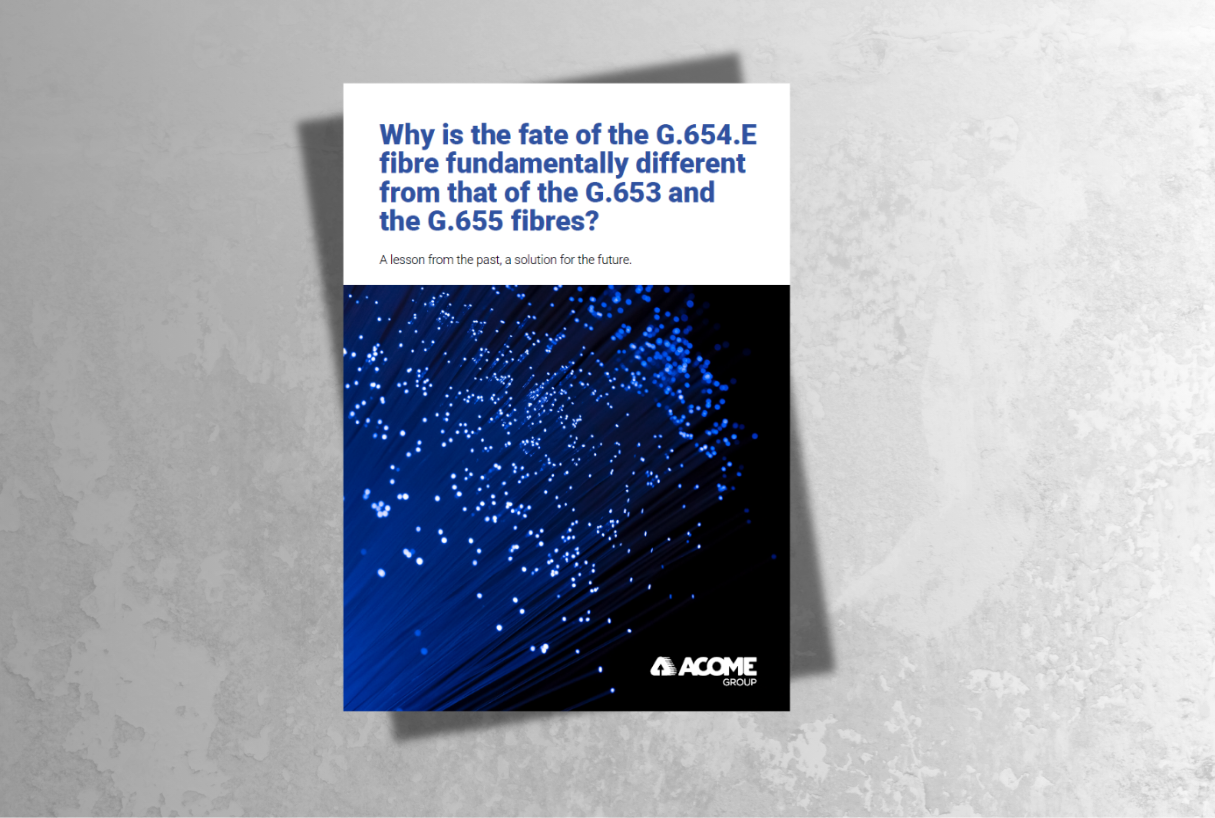
(Re)Discover our first white paper on this topic, co-authored by ACOME and Sumitomo Electric, on the future of optical networks: https://www.acome.com/en/publications/443-white-book/3301-white-paper-g…
As the explosion of data traffic (AI, Cloud, streaming) pushes systems to 800 Gb/s per lambda and beyond, conventional G.652.D fibers are approaching their physical limits over long distances. Through various use cases, this study explores how G.654.E fiber drastically improves throughput and reach performance while reducing operating costs.